Hair transplant surgery is only half the surgery. The real success of the procedure depends on how well you care for your scalp in the weeks and months following the surgery. Many patients worry when they see redness, shedding, or slow growth, but these are the normal parts of the recovery.
This practical guide will explain exactly what to do after a hair transplant surgery in Delhi -day by day, week by week so you can protect the grafts and achieve the best long-term results.
Hair Transplant Recovery Time
Once your hair transplant procedure is complete and you leave the clinic, you can still have access to the post-care transplant program at Dermalife under the care of the top hair transplant surgeon in Delhi, Dr. Guarav Garg, and his team. Your new hair growth may be rough and uneven at first, but you will soon get a head full of hair that you deserve.
Most patients can achieve their full growth in 10 months after the procedure, and if it takes longer, please know that it does not mean that the procedure has not worked.
Here is a complete recovery timeline for our patients at Dermalife
The First Week After Hair Transplant: Critical Protection Time
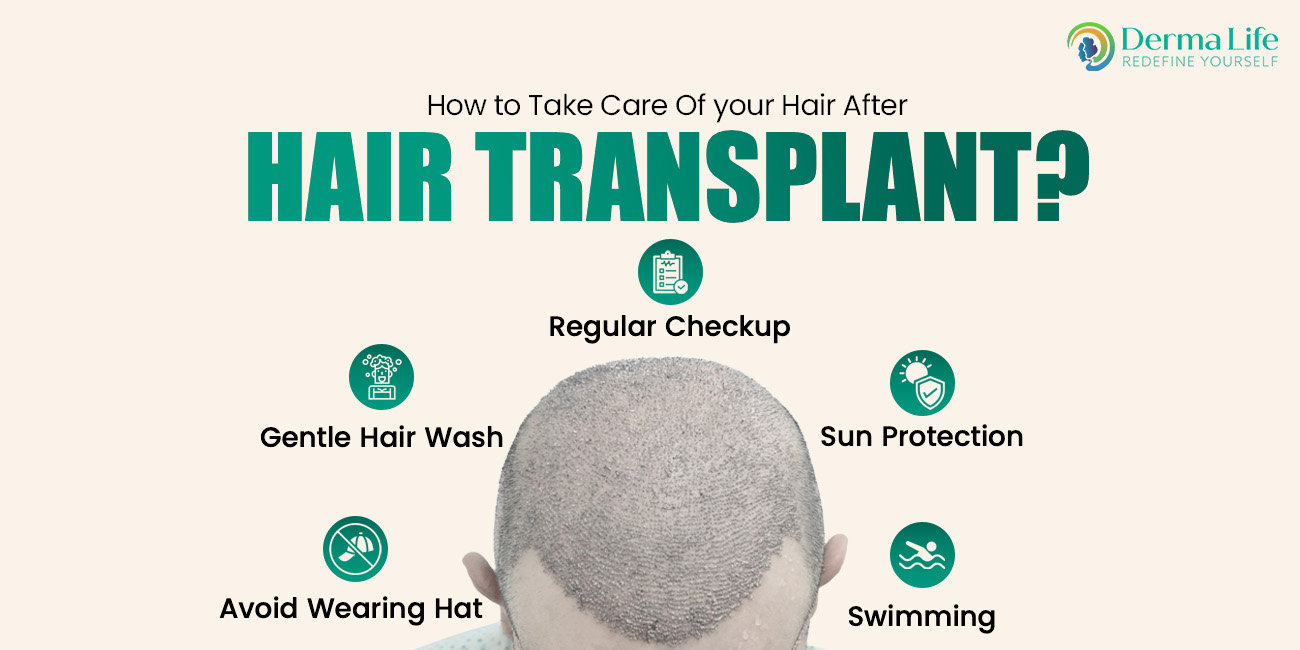
- During the first week, it is crucial to protect the transplanted area from any potential harm. Avoid touching and scratching the scalp, as it can dislodge the hair follicles.
- Refrain from wearing hats, helmets, and tight headwear.
- You will be given pain medications and pain relievers to alleviate the soreness and tightness you may experience.
- Avoid any strenuous activities, as they can dislodge the transplanted hair follicles and hinder the healing process.
- We will provide you with proper instructions to clean the scalp and keep the scalp covered with a surgical cap.
- During the first week post hair transplant, avoid using hair sprays and hair dryers as they can damage the hair follicles.
The first week post hair transplant in Delhi requires emotional support as well. Hair growth is an emotional process, so surround yourself with friends and family who understand the nature of the recovery process.
After 20 Days: Starting Minoxidil & Supplements
Around 20 days post-surgery (only if your doctor advises), supportive treatments may begin:
Minoxidil: Helps improve blood circulation to the follicles and stimulates faster entry into the growth phase.
Hair Vitamins & Biotin: Support keratin production and improve hair shaft strength.
Multivitamins with Zinc & Iron: Essential for follicle metabolism and tissue repair.
These are not magic products — they support the follicles while nature does the real work.
Consistency matters more than speed.
The First Three Months: Shedding Phase
- It is normal to experience temporary shedding of the transplanted hair within the first two to three weeks. The shedding occurs as a natural part of the hair growth and is not a sign of a failed hair transplant.
- The transplanted hair will gradually enter a resting phase before growing again, and thus, you have to be prepared for this phase. Dr. Gaurav Garg and his team advise patients to refrain from panicking during this phase.
- During this period, you can use mild shampoos and be gentle when massaging your scalp.
- Do not use any hair styling products or apply any heat to the scalp until your surgeon says so.
- Patience is the key during the first three months post hair transplant. Results may vary from person to person, and it is important to understand that visible improvements may take some months to appear.
- You have to make some lifestyle modifications during the initial months post hair transplant. Avoid strenuous activities, refrain from smoking, and alcohol consumption. Follow a healthy diet to support the healing process and promote hair growth.
The 3rd to 6 months
- By the third month after your hair transplant, you will begin to see the first sign of your hair growth. The hair will appear thin and wispy, but it is completely normal. The thickness will increase with time.
- By the sixth month, the hair density will improve, and newly transplanted hair will blend with your existing hairline, resulting in a natural appearance.
- During these months, the transplanted hair will continue to grow in length. It is essential to note that the rate of hair growth can vary significantly from person to person. Some people experience fast hair growth, while some experience slow hair growth. Patience is the key.
- The texture and pattern of the transplanted hair will also become apparent during this stage. The newly grown hair will have a different texture and pattern from your existing hair.
- This is because the texture of the transplanted hair depends on the donor hair and from where it is extracted.
- Regular follow-up appointments with your hair transplant doctor in Delhi are essential to monitor your hair growth and determine its density.
- The third to sixth months can have a significant psychological impact, and it is very important for everyone to know that it will take a year to see the full results.
6 to 9 months Post Hair Transplant
- By the 6 th to 9 th month, the transplanted hair will continue to grow and thicken. You will notice a significant increase in the hair density as the transplanted hair follicle will establish a stronger presence in the recipient area.
- The texture of the transplanted hair will continue to improve.
- You will have more hair styling options at your disposal.
- The hairline will continue to soften, and asymmetries will improve.
- You will also experience scalp sensations. It is normal to feel mild itching and discomfort, but take care of your scalp.
- Attend regular follow-ups with your doctor to see the improvement in hair growth.
9 to 12 months post hair transplant
- The transplanted hair undergoes significant maturity during this stage.
- You will observe a significant increase in hair density, but it is crucial to maintain realistic expectations.
- Minor irregularities in the hairline will improve during this period, and you will see a hairline that closely matches the intended design as discussed with your hair transplant surgeon.
- As you approach the final stage of your hair transplant journey, discuss the long-term hair care maintenance plan with your doctor and use only the recommended hair products to ensure the longevity of your transplanted hair.
Patience for Full Results: While significant improvements will be evident during the 9th to 12th month, it’s important to note that the final results of a hair transplant may take up to a year or more to fully manifest. Hair growth is a gradual process, and individual variations in hair growth rates can influence the timing of the outcome. Continue to be patient and trust in the natural progression of your transplanted hair.
Celebrating the Transformation: As you reach the 9th to 12th month, take the time to celebrate the remarkable transformation you have undergone. A successful hair transplant surgery in Delhi can have a profound impact on your confidence, self-esteem, and overall well-being. Embrace the positive changes and enjoy the benefits of your restored hairline.
Long-term Support: Even after the 9th to 12th month, it is essential to maintain a relationship with your hair transplant surgeon or dermatologist for long-term support. They can monitor your progress, address any concerns or questions, and provide guidance on how to best maintain your transplanted hair over time.
Hair Growth Diet Plan
Hair follicles are metabolically active tissues. They need fuel. Here’s a simple nutrition guide:
| Nutrient | Why It’s Important | Food Sources |
| Protein | Builds hair structure (keratin) | Eggs, paneer, chicken, lentils |
| Iron | Improves oxygen supply to follicles | Spinach, beetroot, dates |
| Biotin | Strengthens the hair shaft | Nuts, seeds, whole grains |
| Zinc | Supports tissue repair | Pumpkin seeds, chickpeas |
| Vitamin C | Boosts collagen formation | Oranges, amla, lemon |
| Omega-3 | Reduces inflammation | Walnuts, flaxseeds |
Unique Fact: Most Patients Don’t Know
Transplanted hair behaves like donor hair. That means:
- It retains resistance to pattern baldness.
- It grows according to its original genetic programming.
- Texture depends on donor area characteristics.
This is why choosing an experienced surgeon matters — graft angle, density, and placement determine naturalness.
Long-Term Maintenance
Even after 1 year:
- Maintain a balanced diet.
- Continue doctor-recommended supplements if advised.
- Avoid aggressive chemical treatments.
- Protect your scalp from excessive sun exposure.
Regular follow-ups help preserve long-term results.
Regular Support at Dermalife and Family-like Treatment
At Dermalife, a hair transplant clinic in Delhi, a hair transplant is not treated as a “procedure day.” It is treated as a long-term relationship. Under the leadership of Dr. Gaurav Garg, every patient receives structured medical follow-up combined with something equally important — reassurance, accessibility, and personalised care.
Continuous Medical Monitoring
Hair growth does not happen overnight. That is why regular follow-ups are built into the treatment plan. Patients are scheduled for periodic evaluations at:
- 10–14 days (healing check)
- 1 month (scalp recovery review)
- 3 months (early growth phase assessment)
- 6 months (density progression evaluation)
- 9–12 months (final maturity review)
During these visits, Dr. Gaurav Garg and his team:
- Examine graft survival
- Monitor density development
- Adjust medications if needed.
- Introduce or modify minoxidil and supplements.
- Address concerns related to shedding or uneven growth
Nothing is left to guesswork.
Immediate Access for Concerns
One of the most appreciated aspects of Dermalife care is accessibility. If a patient experiences:
- Sudden redness
- Excess itching
- Unusual shedding
- Anxiety about growth
The team responds promptly with guidance and reassurance. Because sometimes what a patient needs most is clarity, not just medication.
Personalised Hair Care Planning
Every scalp heals differently. That is why, after the first 20 days, hair care plans are customized. This may include:
- Starting minoxidil (if medically suitable)
- Prescribing biotin, zinc, or a multivitamin support
- Adjusting shampoo recommendations
- Advising on gym, travel, and sun exposure
- Planning long-term maintenance for native hair
The approach is never “one size fits all.”
Honest Conversations & Realistic Expectations
At Dermalife, patients are educated about:
- The shedding phase
- The resting phase
- Why growth may look uneven initially
- Why does full density take up to 12 months
This transparency prevents panic and builds trust. When patients understand the science, they stay calm through every phase.
Family-Like Treatment
Medical expertise matters. But empathy matters just as much. Patients often describe their experience at Dermalife as comfortable and reassuring. The environment is:
- Non-judgmental
- Supportive
- Patient-focused
- Respectful of emotional concerns
Hair loss can deeply affect confidence. Dr. Gaurav Garg and his team understand that behind every transplant is a person seeking confidence, not just coverage. From consultation to final results, patients are treated with care that feels personal — not transactional.
Long-Term Commitment
Even after the 12-month mark, patients are encouraged to stay connected for:
- Native hair preservation advice
- PRP recommendations (if required)
- Lifestyle guidance
- Seasonal scalp care tips
Because maintaining results is just as important as achieving them.
At Dermalife, you are not just another case file — you are guided, supported, and cared for at every step of your hair restoration journey. Book your hair transplant surgery in Delhi today.
dermalife
Dermatologist Hair Transplant Surgeon
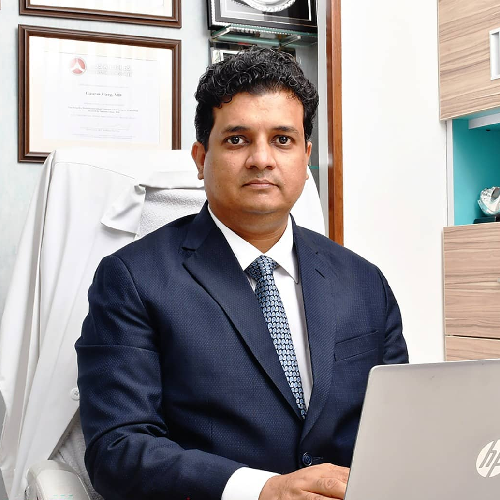
Dr. Gaurav Garg, an esteemed MBBS and MD in Dermatology from the prestigious GS Medical College and KEM Hospital in Mumbai, is a certified hair transplant surgeon and renowned skin specialist. With over 18 years of hands-on experience, Dr. Garg has successfully transformed countless lives with his expert care and innovative techniques. As the Founder and Director of Dermalife Skin and Hair Clinic, one of the best hair transplant clinics in Delhi, Dr. Garg stands at the forefront of cutting-edge dermatological and hair restoration treatments. He pioneered the Boosted Hair Transplant Technique, a breakthrough approach that offers natural-looking and long-lasting results. Recognized as one of the best hair transplant surgeons in India, Dr. Gaurav Garg has performed more than 10,000 successful hair transplants, helping patients regain their confidence and self-image. His excellence is trusted not just by everyday patients, but also by celebrities and public figures. He has performed hair transplants for Bhakhtiyar Irani, PR Sreejesh, Shaji Chaudhary, Saanand Verma, and many others — further solidifying his credibility, skill, and industry reputation. To consult with Dr. Gaurav Garg at one of the celebrity hair transplant surgeon in India, call us at +91-8882047047 or email info@dermalife.co.in