Share your details to receive a FREE CALL from our experts
Treatment is available worldwide
India’s Leading Dermatologist Clinic

A team of certified and specialized doctors

Book Your Consultation Now

Dr. Gaurav Garg is renowned for his expertise in dermatology, particularly in treating vitiligo and leucoderma. Here's why he is considered one of the best dermatologists in Delhi:
WhatsApp us the pictures of the affected areas
Free Diagnostics & Consultation
Speak with our vitiligo specialist
Customised Vitiligo treatment available
*Video - Consultations Available
Consult a vitiligo specialist if you notice these symptoms


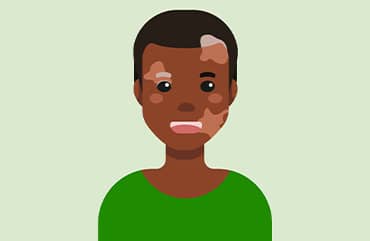

Vitiligo is an autoimmune disorder in which the body's immune system destroys the melanocytes of the skin cells that produce melanin. This results in white patches on the skin and can also cause other symptoms like loss of color in the mouth, nose, and lips, premature greying or white streaks in hair, and white patches in eyebrows and eyelashes.
Vitiligo runs in families, but the inheritance pattern is complex, and only some whose close relative has vitiligo are likely to develop it. About 30 % of people build vitiligo because it runs in their families, and about one-fifth of the people with this condition have at least one close relative who is also affected. So yes, family history can be the cause of vitiligo.
Free radicals eat unstable molecules that are highly reactive due to unstable electrons. They are produced during the normal metabolic process or when your body is exposed to pollution, smoking, or certain chemicals. They interact with lipids and proteins in the body by stealing their electrons and destabilizing them. This leads to the destabilization of other cells and a chain reaction. This imbalance of free radicals and antioxidants leads to oxidative stress and hence leads to melanocyte loss, thus causing vitiligo.
Hormonal changes that occur during puberty and menopause can also trigger vitiligo. Hormonal imbalances particularly linked to thyroid disorders like Hashimoto's disease or Grave's disease are associated with vitiligo. Other hormones that may also be involved in vitiligo are testosterone, estrogen, ACTH, MSH, and melatonin..
Vitiligo is an autoimmune disease. People with Vitiligo are more likely to develop other autoimmune disorders as well, like autoimmune thyroid disease, type 1 diabetes, pernicious anemia, rheumatoid arthritis, and lupus. People with vitiligo who have other autoimmune disorders can also benefit from being referred to a specialist..
Vitiligo is a chronic disorder characterized by the loss of pigment-producing cells, also known as melanocytes, in certain areas of the skin, leading to white patches. An immune system attack, family genetics, or environmental factors can cause it. White patches will appear on the face, hands, elbows, knees, and genital area. On the other hand, Leucoderma is any condition that can lead to loss of skin pigmentation, which can be due to vitiligo, chemical exposure, burns, trauma, or infections. Leucoderma patches start as small cuts and change into white patches.





C 15, Side Portion of Ground floor, Green Park Extension, New Delhi 110016

Share your details to receive a FREE CALL from our experts
Treatment is available worldwide